Inside the
Iustitia webgl showcase
Not just the live site. The brief, the thinking and every piece we shipped to get it live.
The brief
The webgl showcase
What we delivered
The specs
We set ourselves one test: could a website feel like standing in front of a real sculpture, with no photographs and no video, just live 3D? It had to load fast, run smoothly on an ordinary laptop, and tell a story about the statue instead of leaving her to spin on a turntable.
The approach
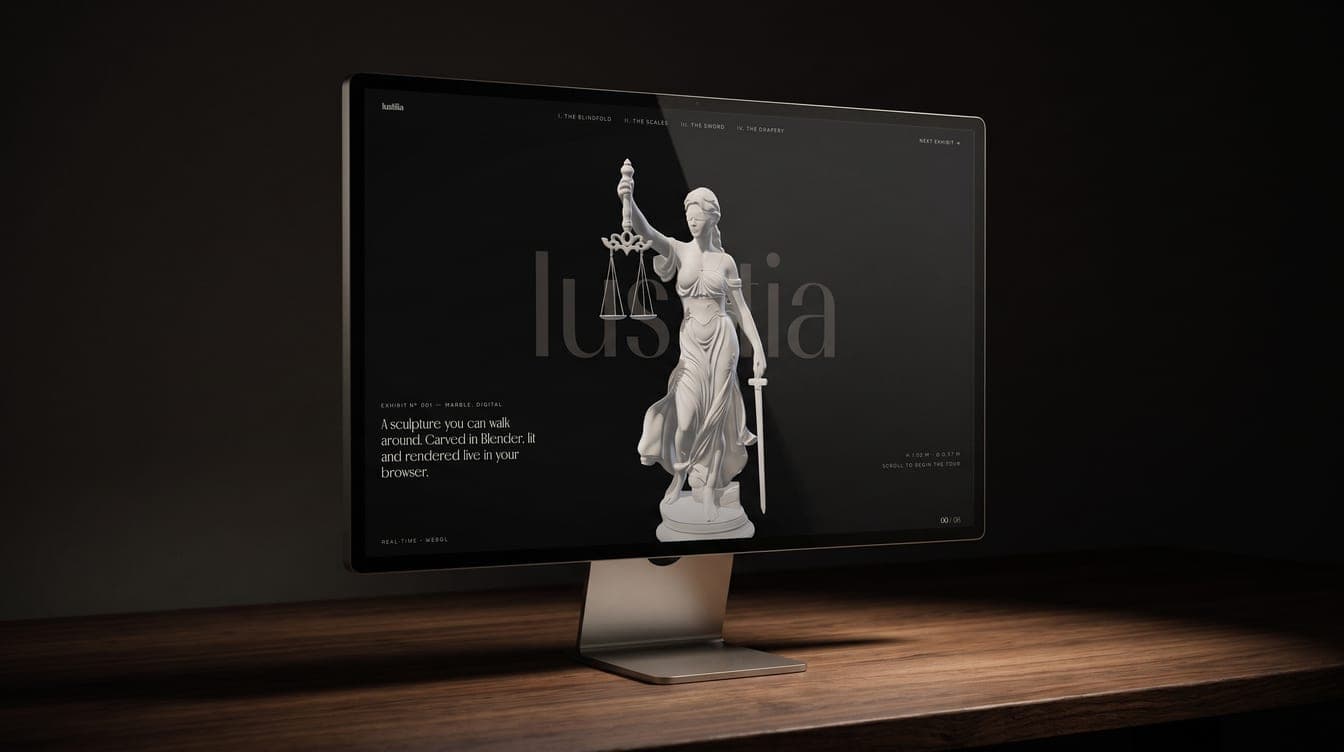
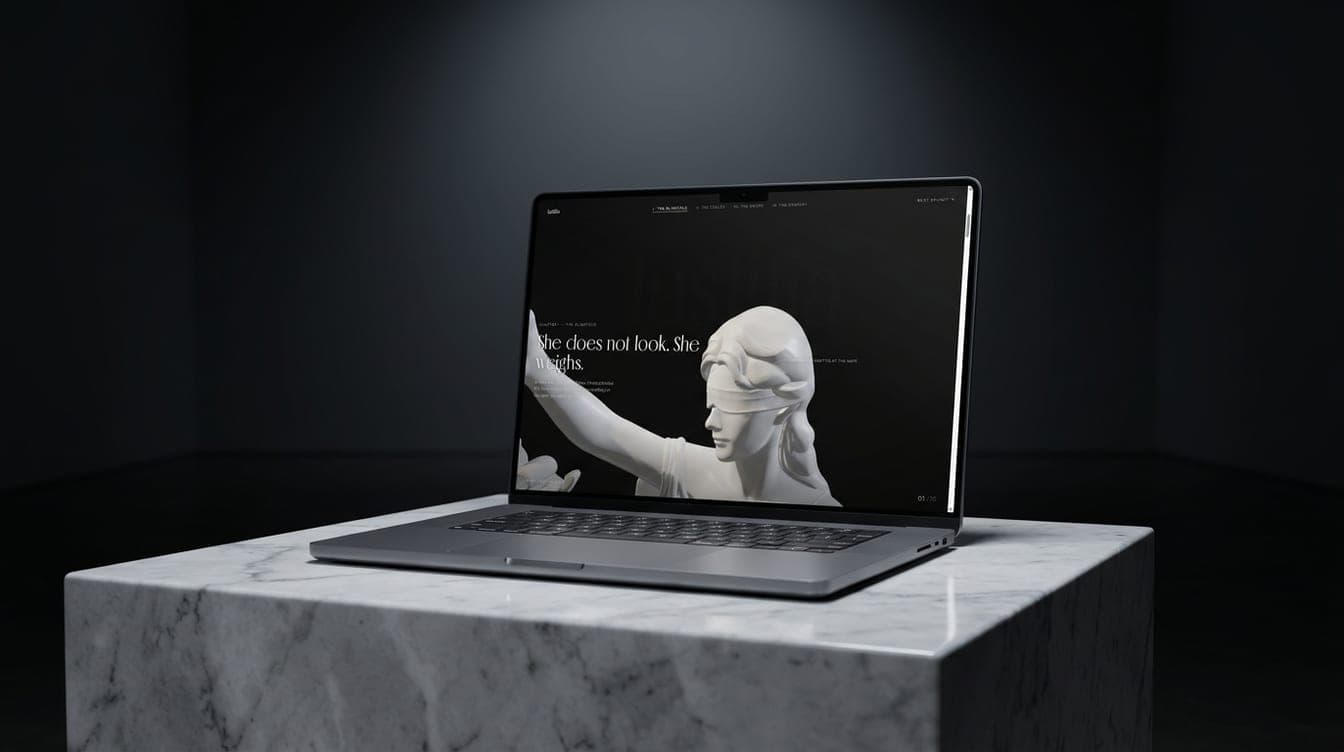
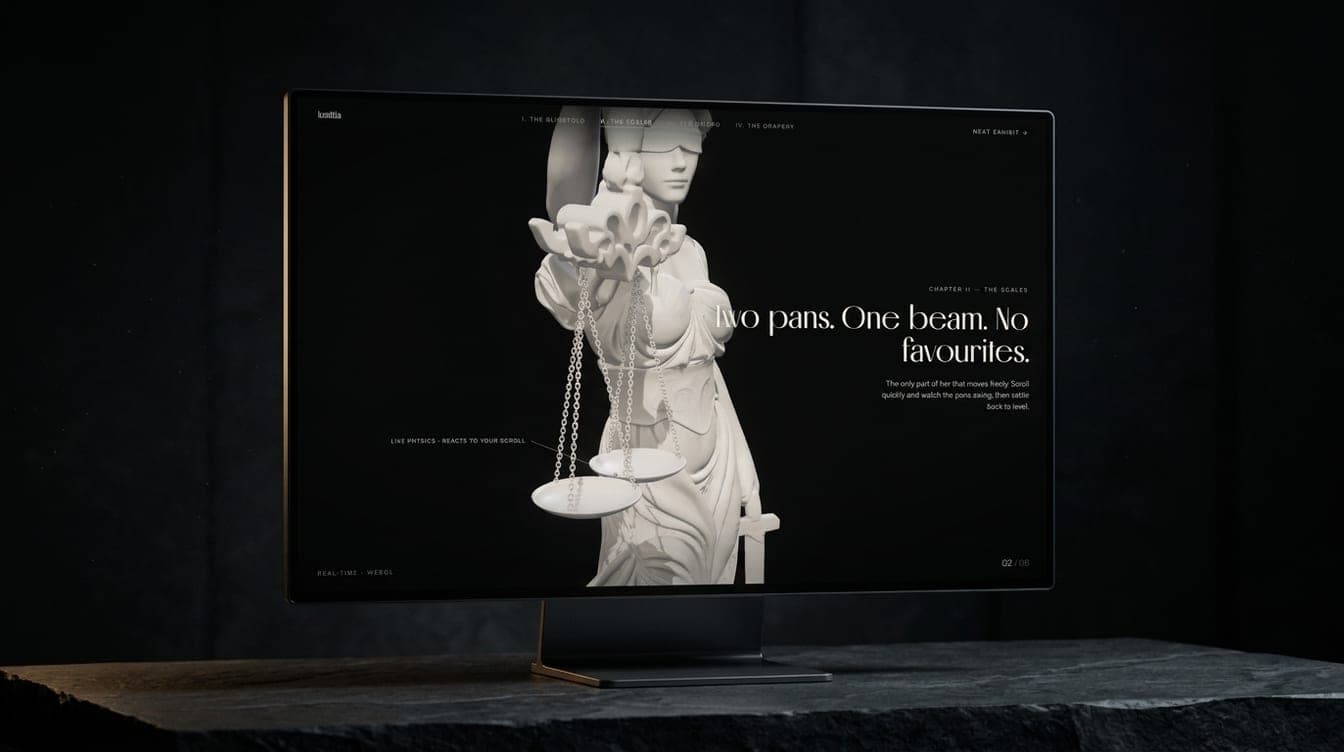
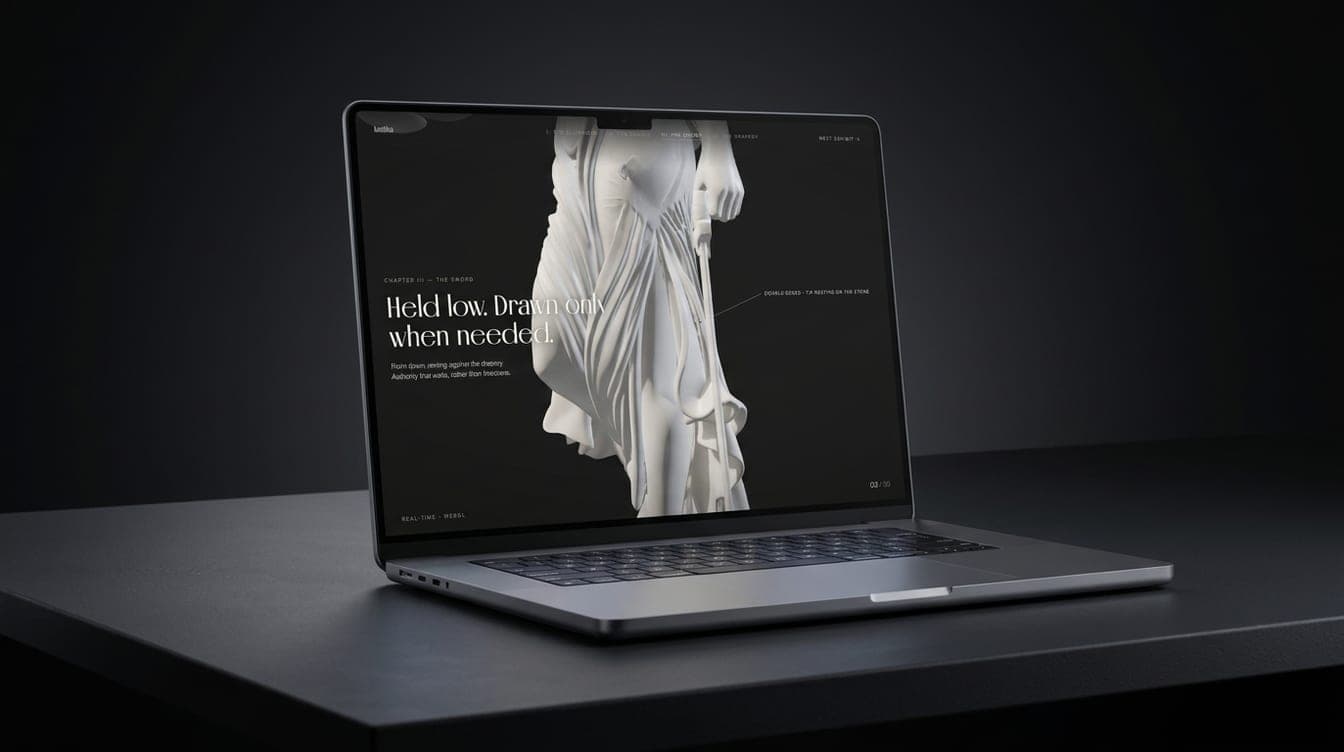
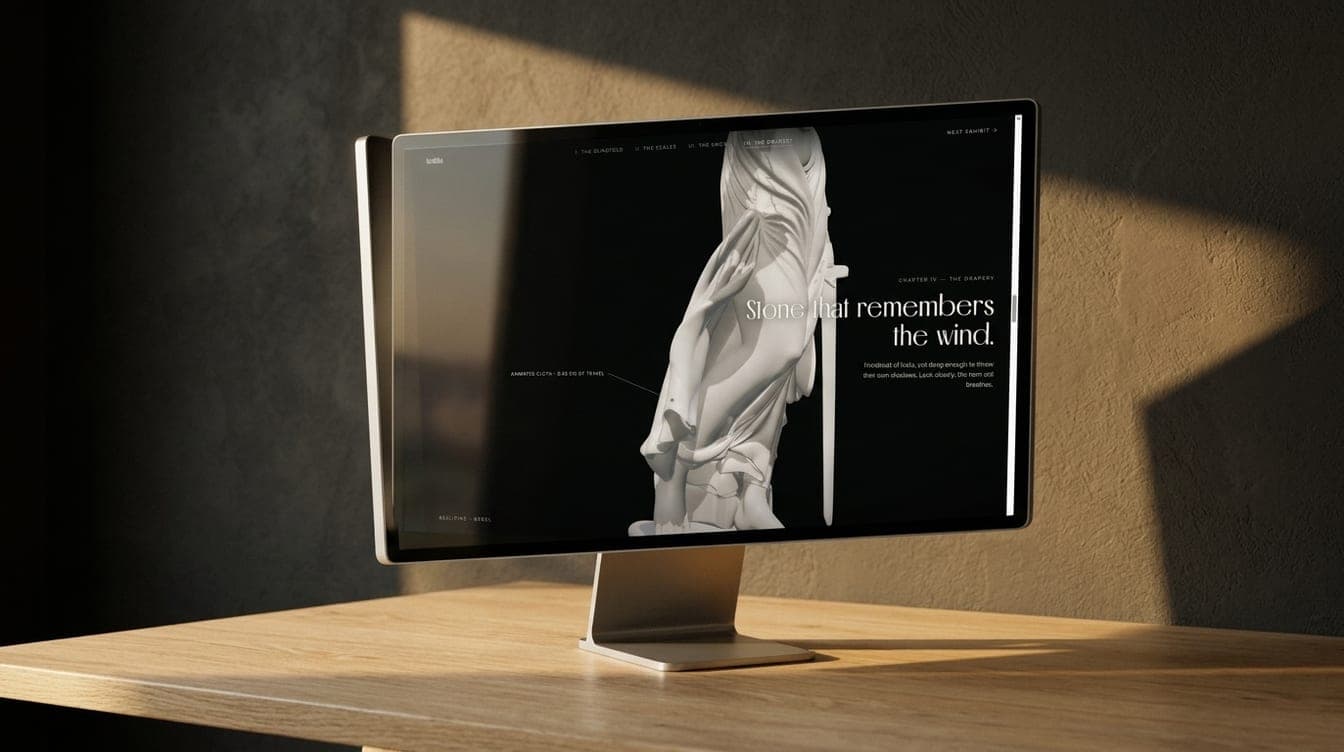
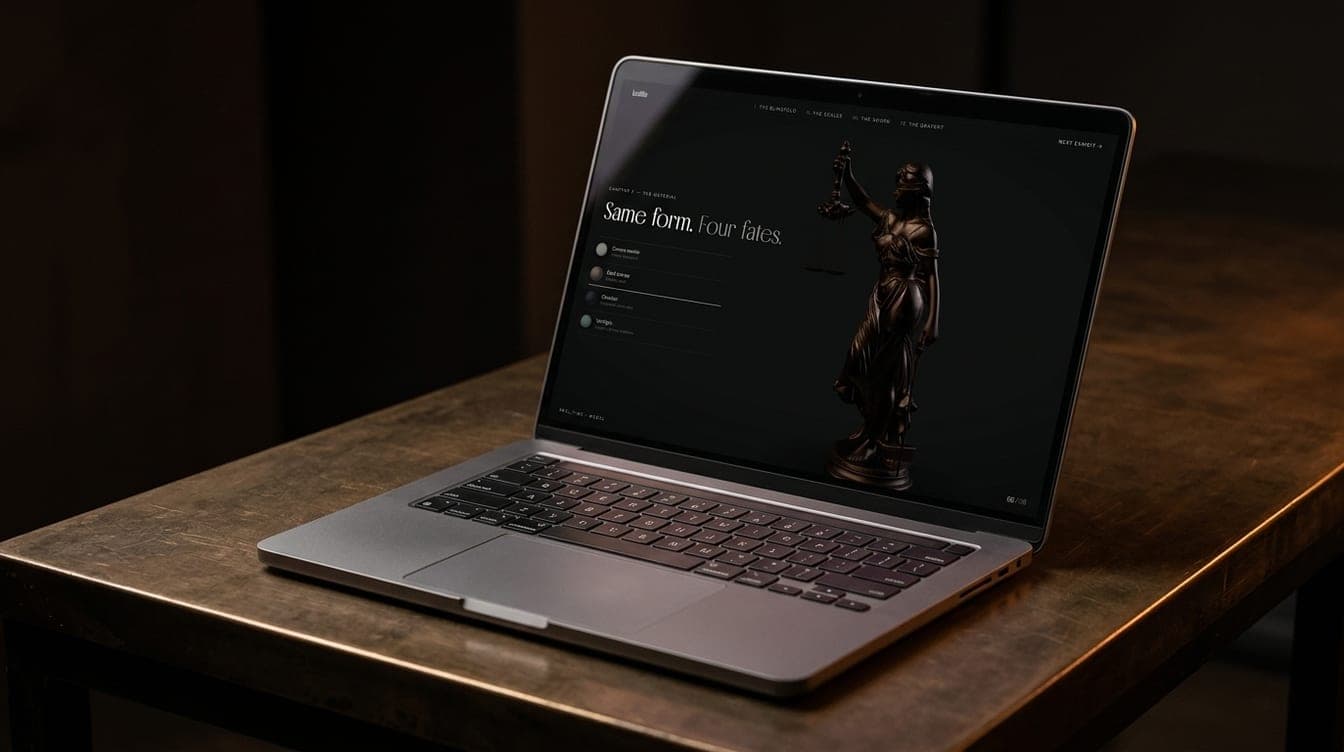
The page is laid out like a museum tour, Exhibit Nº 001, in chapters. The camera moves in close for each part of the figure. Chapter I is the blindfold: “She does not look. She weighs.” Chapter II is the scales, which run on a spring simulation, so the pans swing if you scroll fast and then settle back to level. Chapter III is the sword, “Held low. Drawn only when needed.” Chapter IV is the drapery, “Stone that remembers the wind”, where a vertex breeze keeps the hem moving. Chapter V offers four materials, Carrara marble, dark bronze, obsidian and verdigris, and every one is a shader, not a texture. Chapter VI lets you drag to turn her. The page then closes on a colophon that lists the numbers behind it.
The details,
in short.
Iustitia is a concept · real-time 3d exhibit. Iustitia is a concept study of our own, a marble statue of Lady Justice that you tour by scrolling. “A sculpture you can walk around. Carved in Blender, lit and rendered live in your browser.” Nothing on the page is a photograph.
We set ourselves one test: could a website feel like standing in front of a real sculpture, with no photographs and no video, just live 3D? It had to load fast, run smoothly on an ordinary laptop, and tell a story about the statue instead of leaving her to spin on a turntable.
Concept, 3D modelling, WebGL, Shader design, Scroll storytelling.
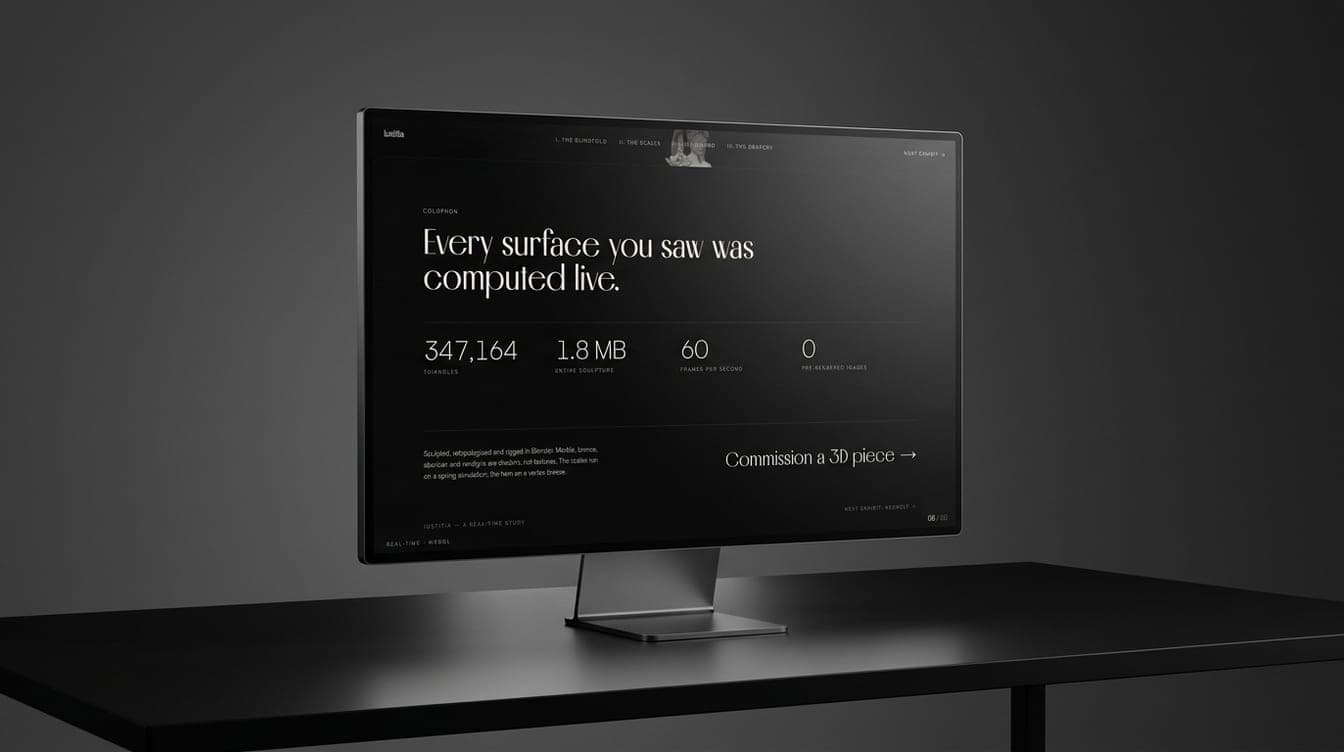
Triangles: 347K · Entire sculpture: 1.8 MB · Frames per second: 60
A single scroll-driven page rendered live in WebGL: 347,164 triangles, 1.8 MB for the whole sculpture, 60 frames per second, and zero pre-rendered images. The figure was sculpted, retopologised and rigged in Blender, and the page has chapter navigation, a four-material switcher and a drag-to-rotate finale. It ends with one call to action, commission a 3D piece.